Packaging is no longer a secondary design task it’s a growth lever. In 2026, packaging design sits at the intersection of branding, sustainability, user experience, and conversion optimization. For business owners and small brands, the right packaging can increase perceived value, reduce returns, improve customer retention, and directly influence buying decisions.
This guide is written for founders, small business owners, marketers, and product creators who want more than trend lists. You’ll learn what’s changing in packaging design in 2026, why it matters, and how to design your own packaging like a professional without guesswork or wasted budget.
We’ll cover beginner fundamentals, advanced design strategies, industry-specific applications, real-world examples, and how to turn packaging into a competitive advantage.
Why Packaging Design Matters More Than Ever in 2026
In 2026, packaging isn’t just about protection it’s about communication, trust, and experience.
Here’s why packaging design has become mission-critical:
- First impressions now happen online and offline
Customers see your packaging on product pages, unboxing videos, social media, and reviews before they ever touch the product. - Packaging influences perceived value
A well-designed box can justify premium pricing even for commodity products. - Sustainability is a buying trigger
Eco-conscious packaging decisions directly impact purchase intent. - Retail shelves are more competitive
Packaging must communicate benefits in seconds. - Direct-to-consumer brands rely on packaging to replace in-store salespeople
If your packaging looks generic, outdated, or confusing, customers assume the product is too.
The Core Principles Behind 2026 Packaging Design Trends
Before jumping into trends, it’s important to understand why these shifts are happening. Every major packaging trend in 2026 is driven by four core forces:
1. Consumer Trust and Transparency
Buyers expect honesty clear labeling, authentic materials, and no visual deception.
2. Sustainability Without Sacrificing Aesthetics
Eco-friendly no longer means “plain” or “cheap.” Brands are blending sustainability with premium design.
3. Experience-Driven Design
Unboxing is now part of the product. Packaging must feel intentional, memorable, and share-worthy.
4. Brand Differentiation in Crowded Markets
Packaging is often the fastest way for small brands to compete with established players.
Top 2026 Packaging Design Trends You Must Know
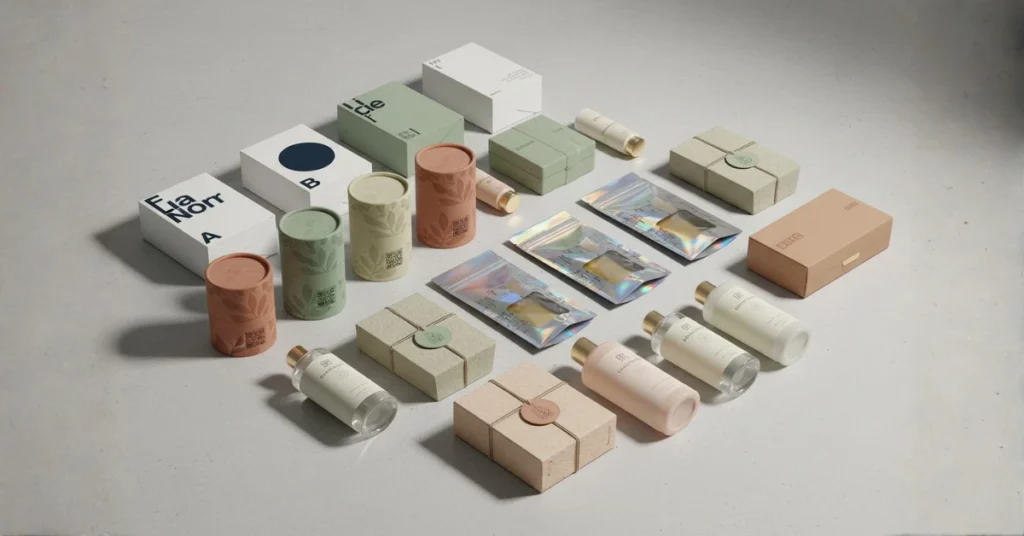
1. Minimalist Design with Strategic Boldness
Minimalism continues in 2026 but it’s evolving.
Instead of flat, empty designs, brands are combining clean layouts with one bold visual element:
- Oversized typography
- Single accent color
- Subtle texture or embossing
- Intentional white space
This approach improves readability, brand recognition, and shelf impact.
Best for:
Cosmetics, supplements, medical products, luxury retail boxes.
Explore professional packaging options by category on the box by style page to see how structure supports minimalist design.
2. Sustainable Packaging as a Brand Statement
Sustainability in 2026 is no longer optional and no longer hidden.
Brands are:
- Printing sustainability claims directly on packaging
- Using kraft, recycled cardboard, and compostable materials
- Designing packaging that looks eco-conscious
This trend pairs well with natural color palettes, soft inks, and uncoated finishes.
For beauty brands, this aligns perfectly with eco-forward packaging strategies outlined in eco-friendly cosmetic packaging ideas.
3. Smart Packaging and Interactive Elements
While full NFC integration isn’t universal yet, 2026 sees wider adoption of:
- QR codes linking to:
- Product education
- Authenticity verification
- How-to videos
- Augmented reality (AR) experiences
- Scan-to-reorder functionality
These features turn packaging into a digital touchpoint without increasing production complexity.
4. Custom Structures Over Generic Boxes
Stock box shapes are losing effectiveness.
In 2026, brands invest in custom box structures that:
- Improve product protection
- Enhance unboxing
- Create shelf differentiation
Popular structures include:
- Flip-top mailer boxes
- Drawer-style boxes
- Window boxes
- Auto-lock bottom boxes
Understanding structural options is essential start with this comprehensive breakdown of types of packaging boxes.
5. Typography-First Branding
Typography is no longer supporting design it is the design.
Brands are using:
- Custom fonts
- Large, bold type
- Vertical text orientation
- High-contrast lettering
This approach improves legibility and memorability, especially in retail environments.
6. Industry-Specific Packaging Design
Generic packaging doesn’t perform.
In 2026, successful brands design packaging tailored to industry expectations:
- Cosmetics: Luxury finishes, rigid boxes, soft-touch coatings
Learn advanced techniques in how to design luxury cosmetics packaging - Medical & supplements: Clean layouts, regulatory clarity
See best practices in medical boxes printing - Food & bakery: Freshness cues, window cutouts
Explore professional bakery boxes printing
How to Design Your Own Packaging Like a Professional
Designing packaging isn’t about artistic talent it’s about process.
Step 1: Define the Packaging’s Job
Ask yourself:
- Is this packaging meant to:
- Protect during shipping?
- Sell on a shelf?
- Create a luxury experience?
- Where will customers first see it?
- What action should it inspire?
Clear answers guide every design decision.
Step 2: Choose the Right Packaging Material
Material impacts cost, sustainability, and brand perception.
Common materials in 2026 include:
- Kraft paperboard (eco-friendly)
- Corrugated cardboard (shipping durability)
- Rigid boxes (premium feel)
If durability matters, consult this expert corrugated boxes guide.
Step 3: Select the Correct Box Style
Structure affects both usability and cost.
For example:
- Retail display products benefit from custom retail boxes
- Subscription brands perform better with mailer boxes
- Fragile items need inserts and dividers
You can explore real-world examples in the retail boxes and industries sections.
Step 4: Design with Printing in Mind
Designs fail when they ignore printing realities.
Professional considerations include:
- Bleed and trim areas
- CMYK color profiles
- Finish selection (matte vs gloss)
If you’re unsure, this breakdown of matte vs gloss finish helps you choose wisely.
Step 5: Prototype Before Bulk Orders
Never skip sampling.
Professional brands always request physical samples to:
- Verify colors
- Test structure
- Ensure brand consistency
This process is covered in free packaging design samples before bulk orders.
Cost, ROI, and Budget Planning in 2026
Packaging design must be profitable not just attractive.
What Impacts Packaging Cost?
- Material selection
- Print complexity
- Box structure
- Order quantity
- Finishes and add-ons
For transparent pricing expectations, review how much does custom packaging cost.
Measuring Packaging ROI
Smart brands track:
- Increase in repeat purchases
- Reduction in product damage
- Improved conversion rates
- Social media engagement
Use this practical calculator to calculate your custom packaging ROI.
Packaging Trends by Industry (2026 Outlook)
Cosmetics and Beauty
- Soft-touch finishes
- Rigid boxes
- Minimal color palettes
Browse professional cosmetic boxes and advanced cosmetic boxes printing solutions.
Food and Bakery
- Window cut-outs
- Grease-resistant coatings
- Sustainable materials
See popular bakery boxes and custom printed pastry boxes.
CBD and Wellness
- Compliance-driven design
- Clean typography
- Tamper-evident structures
Explore compliant CBD boxes and CBD boxes printing.
Common Packaging Design Mistakes to Avoid
Even in 2026, many brands repeat costly errors:
- Designing without knowing box dimensions
- Overloading packaging with text
- Ignoring regulatory requirements
- Choosing trendy designs that don’t fit the brand
- Skipping professional consultation
Avoid these mistakes by starting with a free consultation before finalizing your design.
Frequently Asked Questions
What are the biggest packaging design trends for 2026?
Minimalist bold design, sustainable materials, typography-led branding, smart packaging, and custom box structures dominate 2026.
Can small businesses afford custom packaging?
Yes. Strategic material selection and smart design choices make custom packaging cost-effective for small brands.
Is sustainable packaging more expensive?
Not always. Many eco-friendly materials now compete with traditional options in price and performance.
How long does it take to design custom packaging?
Design timelines typically range from 1–3 weeks, depending on complexity and revisions.
Should I design packaging myself or hire professionals?
Founders can design concepts, but professional packaging designers ensure print accuracy, compliance, and cost efficiency.
Final Thoughts: Packaging Is Your Silent Salesperson
In 2026, packaging isn’t decoration it’s strategy.
The brands that win aren’t those with the loudest designs, but those with the clearest intent. When packaging aligns with brand values, customer expectations, and operational realities, it becomes a silent salesperson working 24/7.
If you’re ready to turn packaging into a growth asset, explore professional solutions on Custom Design Packaging or request a tailored quote through the get a quote page.
Design with purpose. Package with confidence.