For modern brands, packaging is no longer a protective layer it’s a strategic growth asset.
Whether you’re a startup launching your first product or a small business competing against established brands, the moment a customer touches your packaging, they subconsciously decide whether your brand feels cheap or premium, forgettable or memorable, trustworthy or risky.
This is why more business owners are choosing to work with a professional custom packaging company instead of relying on generic, one-size-fits-all boxes.
Custom packaging gives you control over how your brand is seen, remembered, and shared. It shapes first impressions, influences buying decisions, and plays a direct role in customer retention.
To explore options for your business, you can request a free packaging consultation and start planning your unique design strategy.
What Does “Design Your Own Packaging” Really Mean?
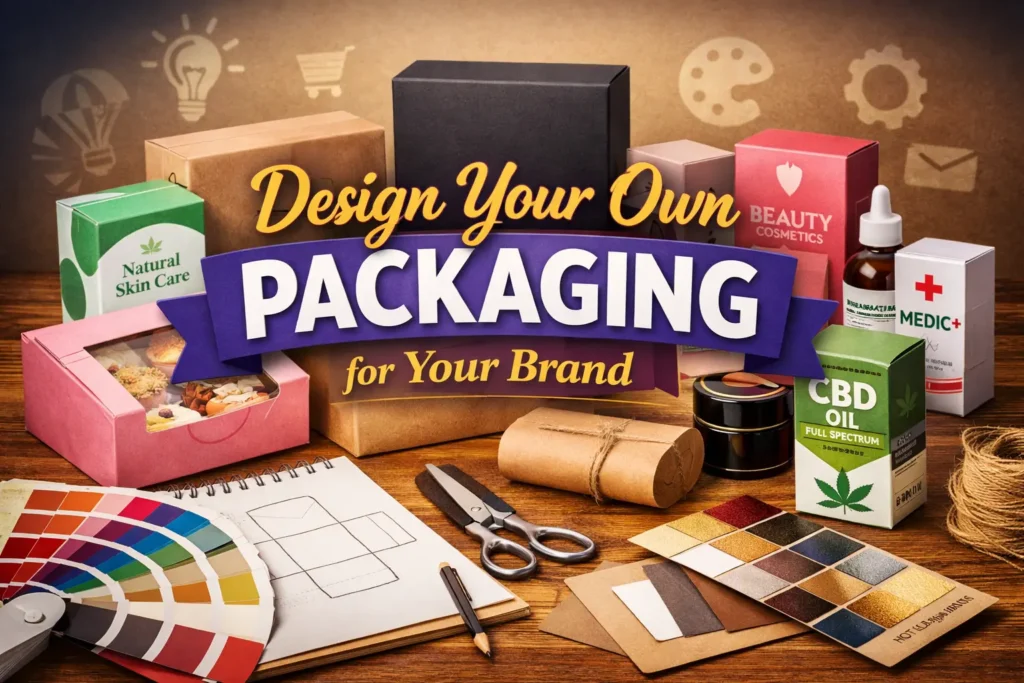
Designing your own packaging means creating packaging that is custom-built for your brand, not pulled from a supplier’s catalog.
It includes control over:
- Box style and structure
- Dimensions tailored to your product
- Material selection
- Print quality and finishes
- Branding elements such as logo placement, colors, and messaging
Unlike stock packaging, custom packaging is intentionally designed to serve both functional and marketing purposes. You can browse different packaging box styles to understand which structure fits your product best.
A helpful way to understand this is to compare it with off-the-shelf packaging options available in the general market. Generic boxes prioritize cost efficiency for the supplier, not brand performance for the business.
Custom packaging, on the other hand, is built around your product, your audience, and your goals—which is why brands that invest in it consistently outperform those that don’t. You can also explore types of packaging boxes to further understand your options.
Why Custom Packaging Matters More Than Ever
1. First Impressions Happen Instantly
Customers form an opinion about your brand in seconds. Packaging is often the first physical interaction they have with your business.
Well-designed packaging communicates:
- Professionalism
- Credibility
- Attention to detail
Poor packaging does the opposite no matter how good your product is.
2. Packaging Influences Buying Decisions
In retail and eCommerce alike, packaging plays a measurable role in conversion rates.
Customers are more likely to:
- Choose a product that looks premium
- Trust brands that invest in presentation
- Pay more for products that feel thoughtfully packaged
This is especially true in competitive industries such as cosmetics, food, retail, and wellness.
3. Packaging Builds Brand Recognition
Your packaging is a mobile brand ambassador. When customers receive, reuse, photograph, or share it, your brand reaches new audiences organically especially on social platforms.
Many brands reinforce their identity by working with custom packaging solutions by industry.
The Business Benefits of Designing Your Own Packaging
Designing your own packaging delivers tangible advantages that directly impact growth.
Stronger Brand Identity
Custom packaging ensures consistency across:
- Logo usage
- Color palette
- Typography
- Brand tone
This consistency builds familiarity, which is a key driver of trust. Many brands improve brand recognition through custom cosmetic boxes and custom bakery box printing.
Better Customer Experience
Thoughtful packaging improves:
- Unboxing experience
- Ease of handling
- Product protection
Satisfied customers are more likely to reorder and recommend your brand. For products like medical items, custom medical boxes printing ensures both compliance and a premium feel.
Higher Perceived Value
Premium packaging allows brands to justify premium pricing even for similar products. To measure the impact, brands often use a custom packaging ROI calculator before production.
Step-by-Step: How to Design Your Own Packaging the Right Way
Step 1: Define Your Brand Positioning
Clarify:
- Your ideal customer
- The emotions your brand should evoke
- Whether your brand is premium, minimalist, playful, or functional
Packaging design should visually reinforce these attributes.
Step 2: Choose the Right Packaging Type
Different products require different packaging structures. You can explore box styles for your product or industry-specific solutions to make the best choice.
- Food brands: bakery boxes printing
- Cosmetic brands: cosmetic boxes printing
- Medical brands: medical boxes printing
- CBD brands: CBD boxes printing
Step 3: Select Materials That Match Purpose and Budget
Material affects:
- Durability
- Shipping costs
- Sustainability perception
Common materials include kraft, corrugated, cardstock, and rigid boxes. You can learn more about matte vs gloss finishes to determine the look and feel that best represents your brand.
Step 4: Design Visual Elements Strategically
Focus on:
- Logo placement
- Color psychology
- Readable typography
- Clear product information
Professional designs can be tested using free packaging design samples before committing to bulk orders.
Step 5: Test Before Full Production
Testing ensures:
- Structural integrity
- Print accuracy
- Customer response
This step prevents costly mistakes and ensures confidence before scaling.
Common Packaging Design Mistakes Business Owners Make
Even experienced brands can make avoidable errors.
- Overdesigning the box: Too many colors, fonts, or messages dilute brand clarity.
- Ignoring practicality: Packaging must protect the product, stack efficiently, and ship affordably.
- Choosing cost over quality: Cheap packaging often costs more in the long run through returns, damage, and brand erosion.
- Forgetting compliance requirements: Industries like medical, CBD, and supplements require strict labeling and packaging standards.
Custom Packaging by Industry: What Works Best
Retail Packaging
Retail boxes need to balance shelf appeal with durability. Display-friendly designs often improve in-store conversions, which is why many brands choose retail boxes printing.
Cosmetic Packaging
Cosmetic packaging is driven by aesthetics and brand storytelling. Many brands invest heavily in cosmetic boxes printing to stand out in saturated markets.
Bakery & Food Packaging
Food packaging must be hygienic, attractive, and functional. Custom bakery boxes printing combines freshness with branding.
Medical & CBD Packaging
Medical and CBD packaging requires precision, compliance, and discretion. Brands benefit from custom medical boxes printing and CBD boxes printing for regulatory alignment.
Sustainable Packaging: A Growing Competitive Advantage
Eco-conscious consumers prefer brands that use:
- Recyclable materials
- Minimalist designs
- Reduced ink usage
Sustainable packaging isn’t just ethical it’s commercially smart. Learn more about eco-friendly cosmetic packaging ideas.
How Custom Packaging Directly Impacts Sales and Growth
Custom packaging influences multiple revenue drivers:
- Improves conversion rates
- Increases repeat purchases
- Encourages social sharing
- Strengthens brand recall
To calculate potential impact, businesses often use a custom packaging ROI calculator.
Why Work With a Professional Custom Packaging Company
Professional partners offer:
- Structural engineering expertise
- Print optimization
- Cost-effective material sourcing
- Scalable production solutions
Learn more about custom packaging companies and their services to ensure packaging aligns with both branding and logistics goals.
Pricing, Turnaround, and What to Expect
Packaging costs vary based on:
- Box size and complexity
- Material choice
- Print finishes
- Order volume
You can get a custom packaging quote to align expectations and budgets before production.
FAQs: Design Your Own Packaging
Q1: Is custom packaging expensive for small businesses?
A: Not necessarily. Many suppliers offer low minimums and scalable pricing.
Q2: Can startups design their own packaging?
A: Yes. Custom packaging is especially important for startups establishing brand identity.
Q3: How long does custom packaging production take?
A: Typically 8–14 business days, depending on complexity and volume.
Q4: Do I need a professional designer?
A: While not mandatory, professional designers help avoid costly mistakes and improve results.
Conclusion: Packaging Is an Investment, Not an Expense
Designing your own packaging is one of the most impactful decisions a business can make. It strengthens brand identity, improves customer experience, and directly influences sales.
Brands that treat packaging as part of their growth strategy consistently build stronger relationships with customers and achieve long-term success.
If you’re ready to take control of how your brand is perceived, the next step is simple: request a free consultation and start designing packaging that truly represents your business.